
Key Takeaway
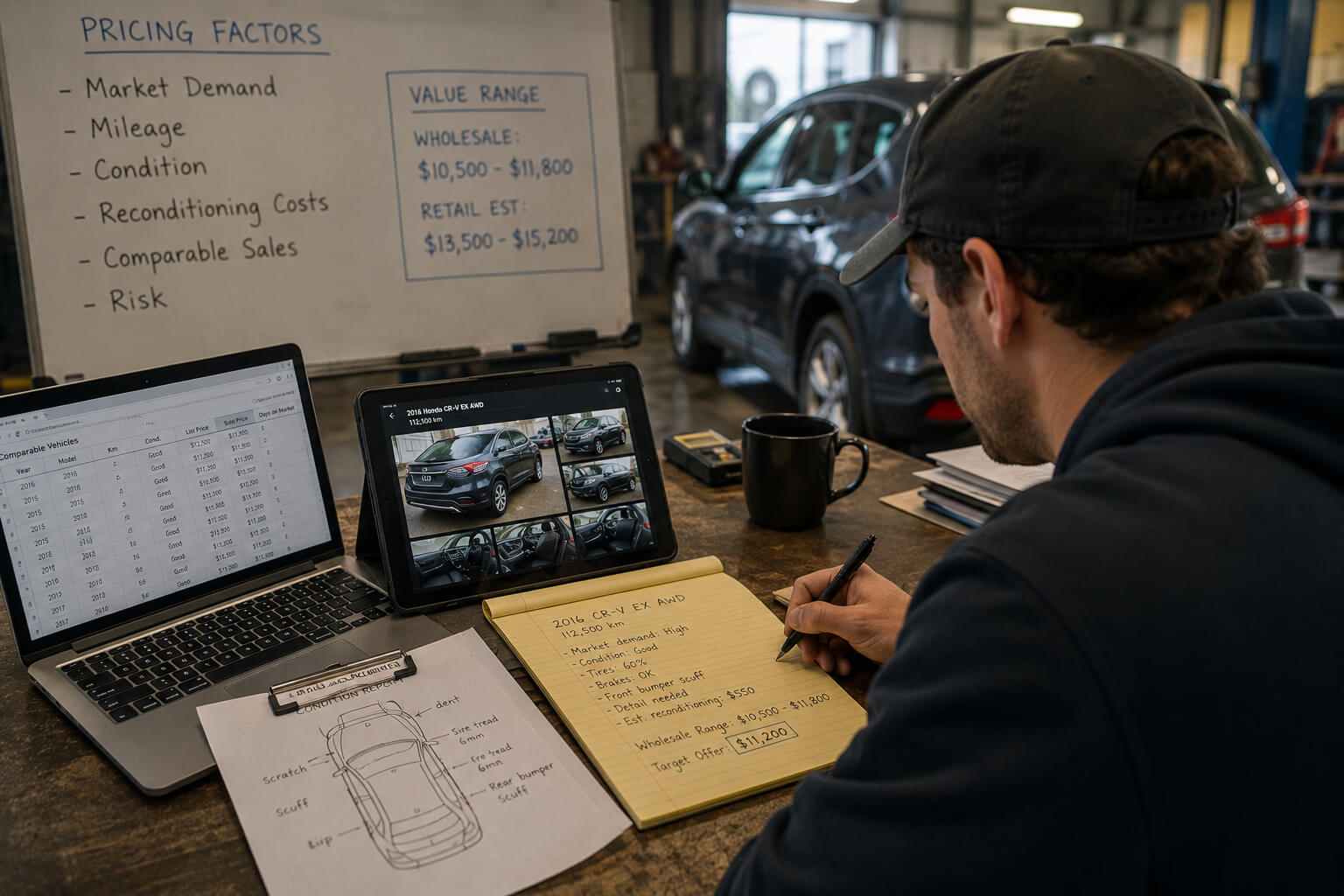
Car buyers don’t just “guess” your car’s value. They follow a structured process that balances resale potential, condition, demand, and risk. The difference between a high offer and a low one usually comes down to how each buyer handles those factors.
It’s Not Random — There’s Always a Process Behind the Number
When you get an offer for your car, it can feel like it came out of nowhere.
One buyer says $3,000. Another says $4,500. Someone else won’t even make an offer at all. From the outside, it looks inconsistent, almost random.
But behind every number is a process.
The car isn’t changing. The way it’s being evaluated is.
Once you understand how that evaluation works, the gaps between offers stop being confusing. They start to make sense.
It Always Starts With a Rough Market Position
Before anything else, a buyer needs to understand where your car fits.
Not in exact terms yet, but broadly. What category is it in? What kind of buyer would want it? Where does it sit in the current market?
A compact sedan, a mid-size SUV, a high mileage work truck — each one lives in a different pricing range. Buyers aren’t comparing your car to everything on the road. They’re comparing it to similar vehicles that are actually selling.
This is the baseline. Everything else builds on top of it.
Mileage Shapes the Category, Not Just the Price
Mileage is one of the first filters applied, but not always in the way sellers expect.
It doesn’t just reduce value. It helps define what kind of car this is in the market.
A vehicle at 80,000 kilometres is treated differently than one at 180,000. Once you cross certain ranges, the expectations shift. Buyers assume more wear, more risk, and a different type of customer.
Some buyers rely heavily on this and apply strict cutoffs. Others treat mileage more as context than a rule.
That’s why the same car can be priced very differently depending on who is looking at it.
Condition Comes Next, But It’s Interpreted Differently
After mileage, condition starts to shape the number.
This is where things get more subjective.
Two buyers can look at the same car and walk away with completely different impressions. One sees a vehicle that needs work. Another sees something that’s still usable with manageable repairs.
The difference isn’t just opinion. It’s experience, cost awareness, and how comfortable that buyer is with imperfections.
A dent, a warning light, or some wear and tear might barely move the needle for one buyer, while another builds a large discount around it.
This is one of the biggest reasons offers vary.
Demand Quietly Drives the Entire Decision
What many sellers don’t realize is how much demand influences the final number.
A car that fits what buyers are actively looking for will always perform better, even with higher mileage or minor issues. A practical sedan, a compact SUV, or a reliable commuter vehicle tends to hold steady demand.
On the other hand, vehicles that are harder to place or less common in the market can be more difficult to price confidently.
Buyers are constantly asking themselves one question:
“How easy will this be to move?”
The clearer the answer, the stronger the offer tends to be.
Repair Costs Are Estimated, Not Exact
If your car needs work, the buyer will factor it in.
But they’re not pulling exact quotes. They’re estimating.
Some buyers are conservative and assume higher repair costs than necessary. This protects them, but lowers your offer. Others are more precise and understand what the work actually involves.
That difference can easily create a gap of hundreds or even thousands of dollars.
It’s not that one buyer is wrong. They’re just operating with a different level of confidence.
Risk Is Always Built Into the Price
Every used car comes with uncertainty.
Even if it runs well today, there’s always a chance something changes. Buyers need to protect themselves against that risk.
Some do it by lowering their offer significantly. Others are more comfortable taking on that risk and pricing more aggressively.
This is where business model starts to matter.
A buyer working on higher margins will build in more protection. A buyer focused on volume may accept more risk in exchange for closing more deals.
Same car, different tolerance, different number.
The Final Number Is a Balance, Not a Formula
At the end of the process, everything gets combined.
The buyer has a rough market position, an understanding of mileage and condition, a sense of demand, and an estimate of repairs and risk. Now they need to land on a number that works for them.
There isn’t a perfect formula.
It’s a balance between:
- what the car could realistically sell for
- how much work is involved
- how quickly they can move it
- and how much margin they need
That’s why pricing isn’t identical across buyers. It’s shaped by how each one weighs those factors.
Why Some Offers Feel Way Off
When an offer feels low, it usually means one of those factors was handled more conservatively.
Maybe the buyer:
- applied strict mileage thresholds
- overestimated repair costs
- didn’t see strong demand for the vehicle
- or needed more margin for their model
None of those are random decisions. They’re part of how that buyer operates.
The challenge is that you only see the final number, not the reasoning behind it.
Why Comparing Offers Changes Everything
This is where things become clear.
When you see more than one offer, you’re no longer guessing. You’re watching different buyers apply different logic to the same car.
One sees risk. Another sees opportunity. One prices conservatively. Another prices based on usability.
That’s when the real value of your car starts to show.
The Car Isn’t Changing — The Buyer Is
This is the most important takeaway.
If your car gets multiple offers, the difference isn’t the vehicle. It’s the buyer.
Understanding that changes how you approach the sale. Instead of assuming your car is only worth what the lowest offer says, you begin to recognize that value depends on who is evaluating it.
That shift alone can protect you from accepting less than you should.
Start With a Real Offer, Then Compare
If you want to understand how your car is being priced, the best place to start is with a real offer.
VendaCar provides instant offers based on condition, demand, and usability, giving you a clear benchmark before you make any decisions.
From there, comparing becomes easy. And once you compare, the differences in pricing start to make sense.