
Key Takeaway
Not all high kilometre cars perform the same. Certain brands and models consistently hold value well past 150,000 km — especially in the 2012 to 2020 range — because buyers trust them, recognize them, and continue to demand them.
Why Some Cars Hold Value Better Than Others
Once a car moves past 150,000 kilometres, it doesn’t just become “high mileage” — it becomes selective.
Some vehicles start to lose attention quickly. Others continue to move without much resistance.
The difference usually comes down to familiarity and reliability.
If a car is known to last, easy to maintain, and widely driven across Canada, buyers are far more comfortable with higher kilometres. That comfort translates directly into stronger offers.
What the Market Actually Looks Like
When you look at real vehicles moving through Ontario, a clear pattern shows up.
Certain brands consistently dominate the high kilometre range. Volkswagen, Nissan, Chevrolet, Mazda, and Hyundai all show up frequently, not because they depreciate faster, but because they stay on the road longer.
Models like the Jetta, Cruze, Mazda 3, Elantra, Rogue, Tiguan, and Pathfinder are extremely common between 150,000 and 200,000 kilometres. They’ve built a reputation for being dependable enough to keep going, which makes them easier to resell.
This lines up with broader market behaviour across Canada. Vehicles that are widely owned and easy to service tend to stay active in the resale market longer.
The Cars That Consistently Perform Well
Some vehicles just show up over and over again in this range.
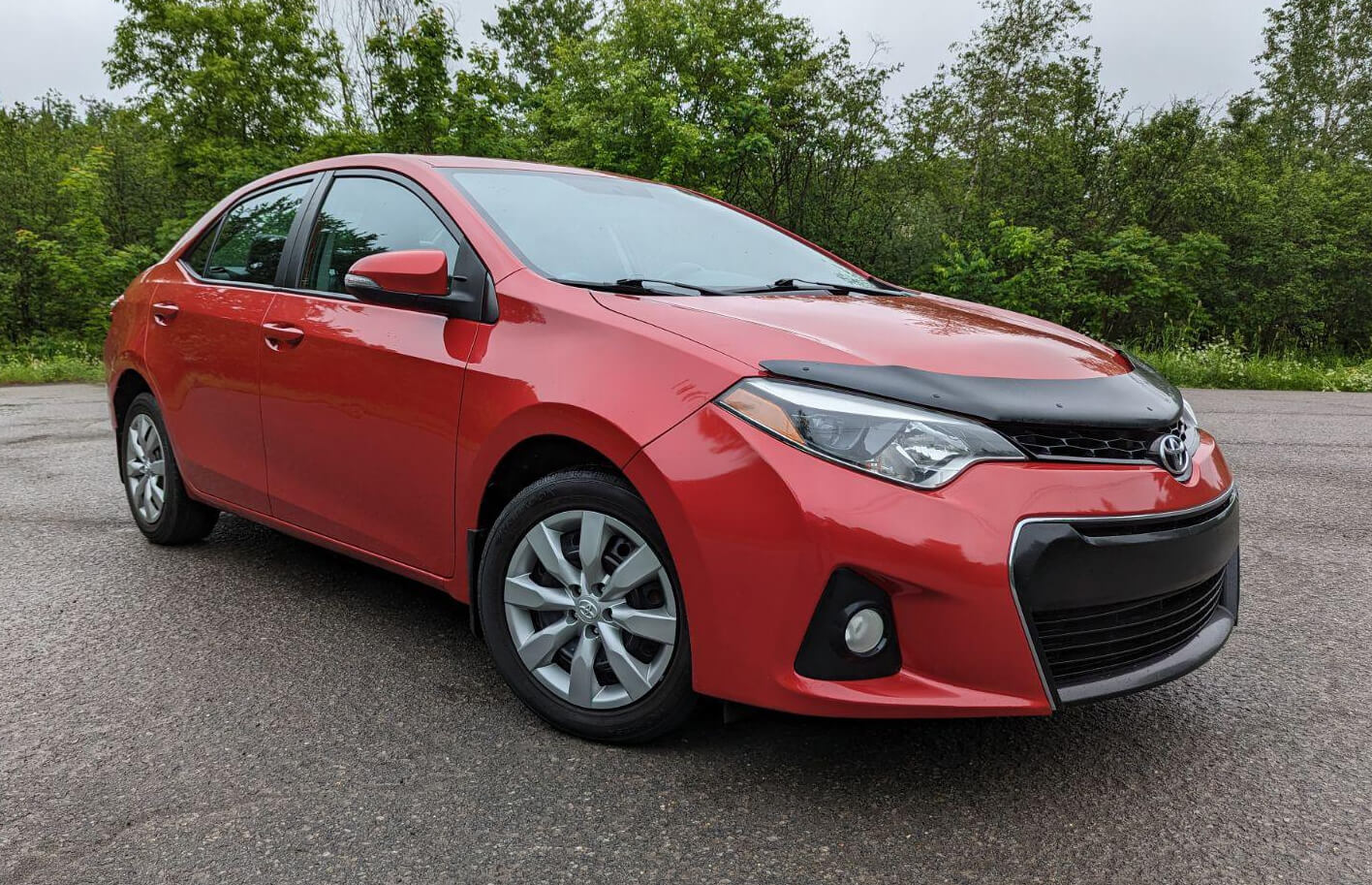
Sedans like the Honda Civic, Toyota Corolla, Mazda 3, Hyundai Elantra, and Volkswagen Jetta continue to hold value because they’re practical, efficient, and known for reliability.
SUVs like the Nissan Rogue, Volkswagen Tiguan, and Nissan Pathfinder follow a similar pattern. They’re common, recognizable, and still useful even as the kilometres climb.
Trucks, especially models like the Dodge Ram 1500, tend to hold up well too, particularly when they’ve been used for highway driving or light-duty work.
These aren’t niche vehicles. They’re the backbone of what’s being driven across Ontario.
Why These Cars Don’t Drop Off the Same Way
The key difference is predictability.
Buyers know what they’re getting with these vehicles. Parts are available, maintenance is familiar, and resale demand already exists.
That removes a lot of uncertainty.
When a buyer feels confident about how a car will perform — even at higher kilometres — they’re more willing to pay for it.
That’s why a Mazda 3 or Civic with 180,000 km doesn’t get treated the same way as a less familiar or less trusted vehicle at the same mileage.
Where the 2012 to 2020 Range Comes Into Play
This is where things really line up.
Cars from 2012 to 2020 sit in a sweet spot. They’re modern enough to meet expectations, but old enough to have built up mileage.
That combination works in your favour.
These vehicles:
- still look and feel current
- still meet buyer expectations
- and are widely accepted in the resale market
When you combine that with higher kilometres, you end up with a category of cars that are still actively traded — not avoided.
Where Sellers Get It Wrong
A lot of people assume that once their car reaches a certain mileage, it falls into the same category as everything else.
That’s not how it works.
A 2016 Mazda 3 with 170,000 km is not being viewed the same way as an older, less reliable vehicle with the same mileage. The same goes for a Rogue, Jetta, or Elantra.
The model matters. The year matters. The reputation matters.
Treating all high kilometre cars the same is where value gets lost.
What This Means for Your Car
If you’re driving one of these common models and it falls within that 2012 to 2020 range, you’re in a much stronger position than you might think.
Even with higher kilometres, there is still consistent demand.
The key is making sure your car is being evaluated based on what it actually is — not just the number on the odometer.
Why We See Stronger Results With These Cars
This is where things become more clear.
When it comes to vehicles in this range, we consistently see stronger offers compared to most buyers.
That’s because we’re actively working within this part of the market. We’re not trying to avoid high kilometre cars — especially when they’re models that continue to perform.
When a car is understood properly, it gets priced properly. And that’s where the difference shows up.
If You’re Thinking About Selling
If your car falls into one of these categories, it’s worth taking a closer look at what it’s actually worth.
High kilometres don’t automatically reduce value across the board. For the right vehicles, they’re just part of the normal lifecycle.