
Key Takeaway
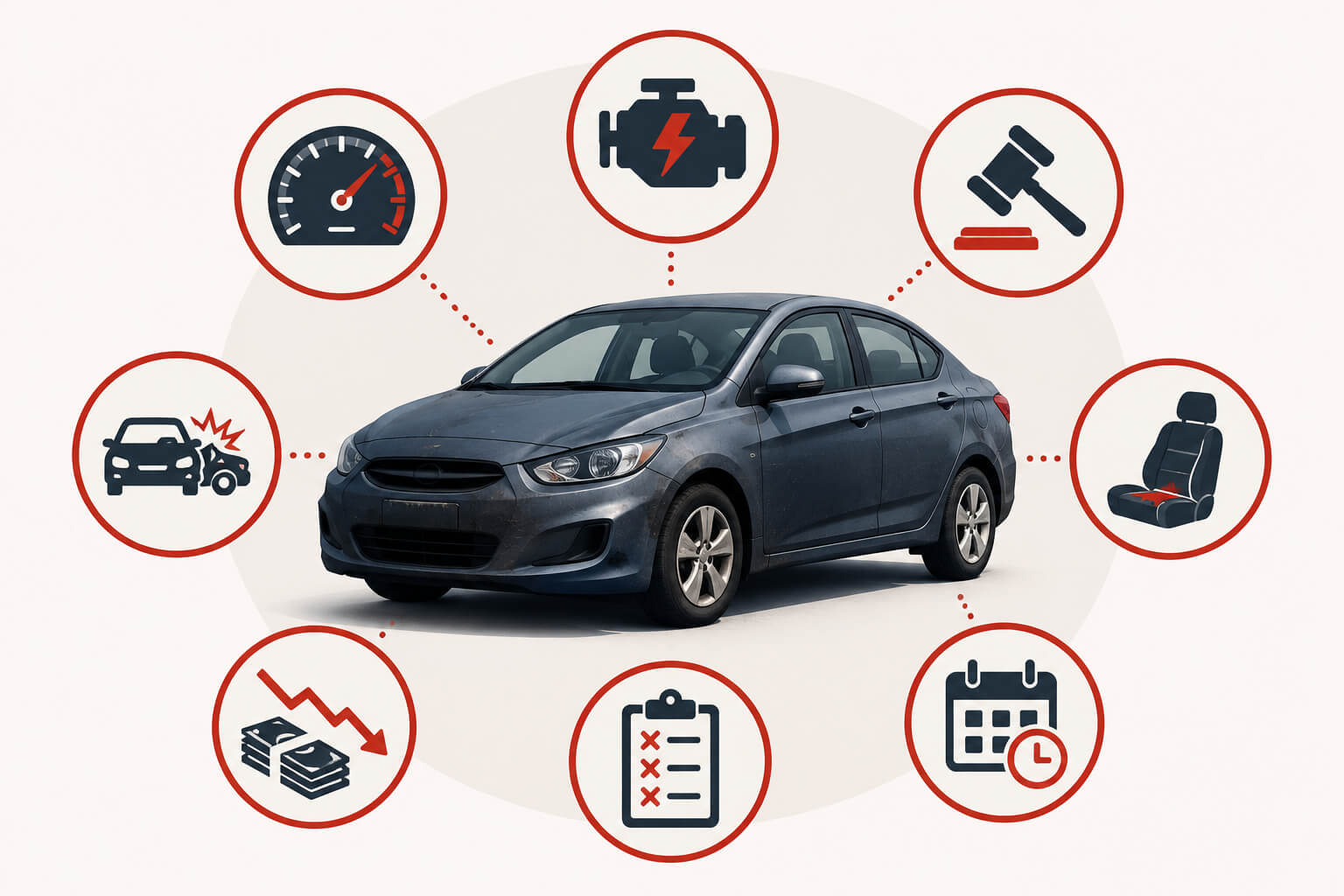
A car becomes hard to sell when buyers see uncertainty, not just flaws. Mileage, condition, and history all matter, but the real issue is how those factors are interpreted. When a car is clear, usable, and properly positioned, it almost always sells.
Why Some Cars Sit While Others Sell Quickly
If you’ve ever tried to sell a car and gotten little to no response, it can feel frustrating fast.
You start questioning everything. Is it the price? The condition? The mileage? Maybe the timing?
Meanwhile, you see other cars move quickly, even when they don’t look that much better.
The difference usually isn’t just the car itself. It’s how easy it is for a buyer to understand and feel confident about it.
Cars don’t sit because they’re bad. They sit because they create hesitation.
Uncertainty Is What Slows Everything Down
Buyers don’t expect perfection, especially in the used market.
What they want is clarity.
When a car raises too many questions, the easiest decision is to move on to the next option. That hesitation can come from something obvious, like visible damage, or something more subtle, like a lack of information.
If a buyer isn’t sure what they’re getting into, they assume the worst.
That assumption is what makes a car feel harder to sell.
Mileage Alone Doesn’t Make a Car Hard to Sell
High mileage gets blamed often, but it’s rarely the full story.
There are plenty of vehicles with 180,000 or even 200,000 kilometres that still sell without much trouble. The key difference is whether the car still feels usable and consistent with what buyers expect at that level.
A clean, well-maintained high mileage vehicle is much easier to sell than a lower mileage one that looks neglected.
Mileage sets expectations. It doesn’t automatically kill demand.
Condition Becomes a Problem When It Feels Unpredictable
Most buyers are fine with some wear and tear.
Scratches, small dents, or minor interior wear usually don’t stop a sale. Where condition starts to matter more is when it feels unpredictable.
A warning light with no explanation, visible damage without context, or signs of inconsistent maintenance can create doubt. Buyers begin to wonder what else might be wrong.
That’s when they either walk away or reduce their offer significantly.
It’s not the issue itself. It’s the uncertainty around it.
Accident History and Rebuilt Titles Add Friction
Cars with accident history or rebuilt status don’t stop selling, but they do require more confidence from the buyer.
These vehicles tend to attract a different type of buyer, one who is more comfortable evaluating condition and looking past labels.
The challenge is that many buyers immediately filter them out, not because they have no value, but because they don’t want to deal with the unknown.
If the condition is clear and the car feels usable, they still move. If not, they tend to sit longer.
Pricing Is Where Most Sellers Get Stuck
One of the biggest reasons cars don’t sell is pricing that doesn’t match the market.
It’s easy to anchor to what you think the car should be worth, especially if you’ve invested money into it. But buyers are comparing your car to everything else available right now, not what you’ve put into it.
If the price doesn’t align with similar options, it creates immediate resistance.
At the same time, pricing too low can create its own problem. It can signal that something is wrong, which again brings uncertainty back into the picture.
The right price doesn’t just attract attention. It builds confidence.
The Type of Car Matters More Than People Think
Some vehicles are simply easier to place in the market.
Practical, widely used models tend to move faster because buyers already understand them. There’s less thinking involved. The use case is clear.
On the other hand, cars that are more niche, less common, or harder to categorize can take longer. Not because they’re worse, but because fewer buyers are actively looking for them.
The easier it is for someone to picture themselves using the car, the easier it is to sell.
Presentation Still Plays a Role
Even though most buyers are focused on value, presentation still matters.
A car that looks clean, photographed well, and clearly described will always perform better than one that feels rushed or incomplete.
This doesn’t mean over-polishing or trying to hide flaws. It means making the car easy to understand at a glance.
Buyers are making quick decisions. The more straightforward the presentation, the better the response.
What Actually Fixes a “Hard to Sell” Car
In most cases, the solution isn’t dramatic.
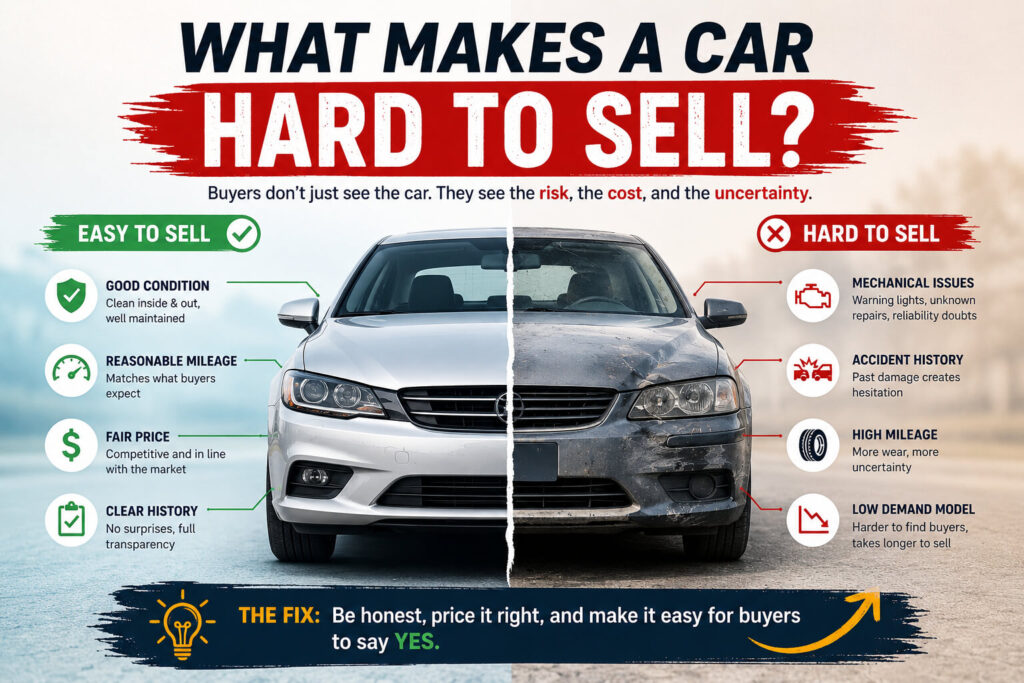
You don’t need to completely rebuild the car or spend heavily on repairs. What usually helps is reducing friction and making the vehicle easier to evaluate.
That can mean:
- being clear about condition
- adjusting price to match the market
- addressing obvious concerns or explaining them properly
- making the car feel usable and straightforward
When those pieces come together, the same car that felt difficult to sell can suddenly become much easier.
Why Some Buyers Still Make Strong Offers
Even when a car feels harder to sell privately, it can still perform well with the right buyer.
Some buyers are more comfortable working with:
- higher mileage vehicles
- cars that need minor work
- vehicles with history or imperfections
They’re not ignoring the issues. They’re simply evaluating them differently.
Instead of focusing on what’s wrong, they focus on whether the car still fits a need in the market.
That difference in perspective often leads to stronger offers, even when the car isn’t perfect.
It’s Not About Fixing Everything — It’s About Positioning
The biggest shift is realizing that you don’t need to “fix” every problem.
You need to position the car properly.
That means understanding where it fits, what buyers expect, and how to present it in a way that reduces hesitation.
Once that happens, the process becomes much smoother.
See How Your Car Is Being Viewed
If your car feels hard to sell, the best way to understand why is to see how buyers are evaluating it.
A real offer gives you insight into how condition, mileage, and demand are being interpreted, without having to guess.
VendaCar provides instant offers based on real market factors, helping you understand where your car stands and what options you have moving forward.